

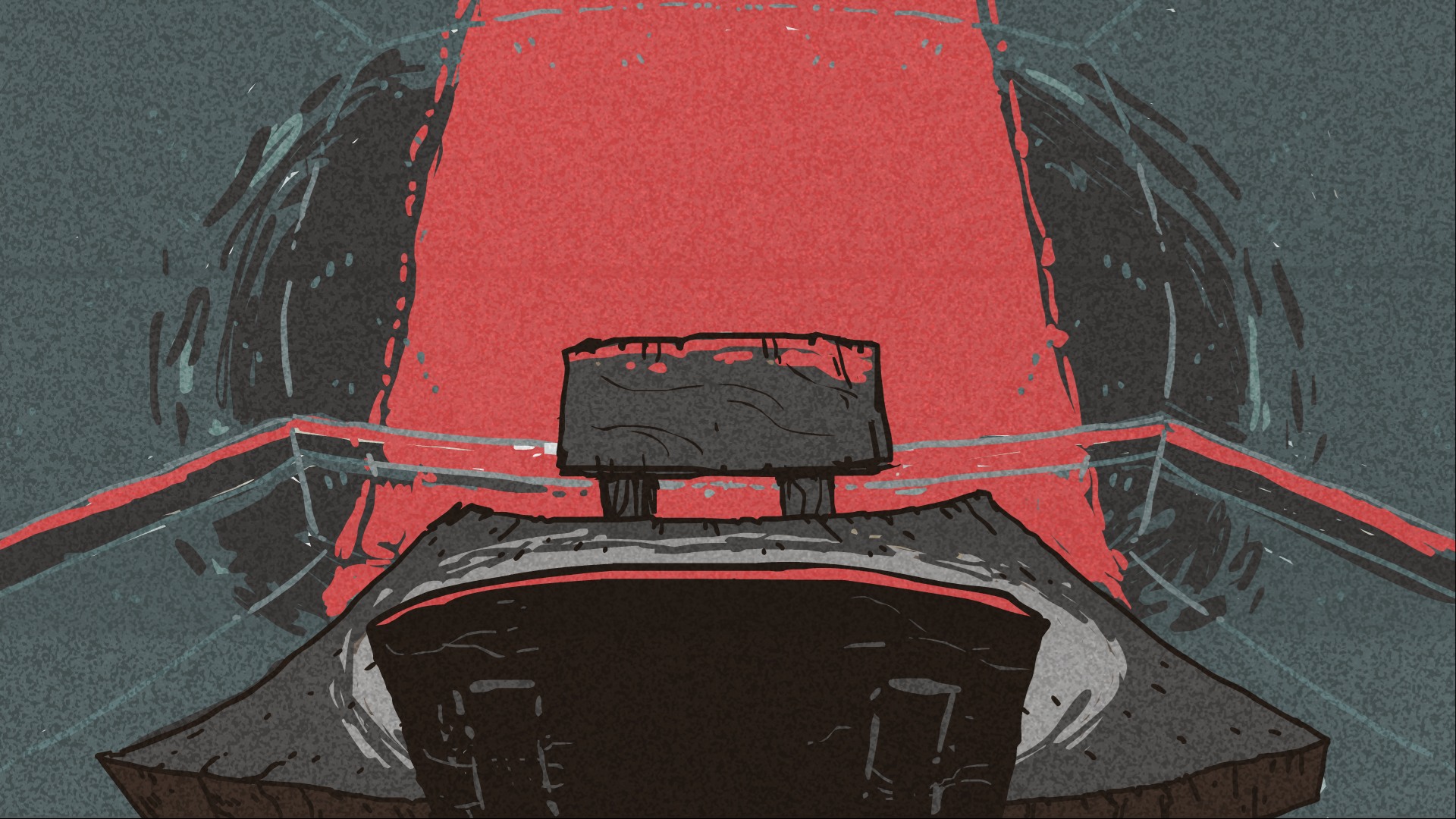

Question what you hear
Players practise spotting inconsistencies, weighing evidence and resisting the easy conclusion, through play rather than lecture.
REC · CASE #001 · INTERROGATION ROOM 3
The Art of Interrogation
File 01 · The premise
Murder Book: The Art of Interrogation is a narrative-driven interrogation game inspired by real police footage and psychological interviews.
You play a detective with no fingerprints, no DNA lab and no forensic shortcuts. There is a suspect across the table, and everything they say, avoid saying, or say a little too carefully.
Every case is a short, self-contained story. You win it by listening.
For fans of Her Story · Papers, Please · L.A. Noire · Return of the Obra Dinn




File 02 · The interrogation loop
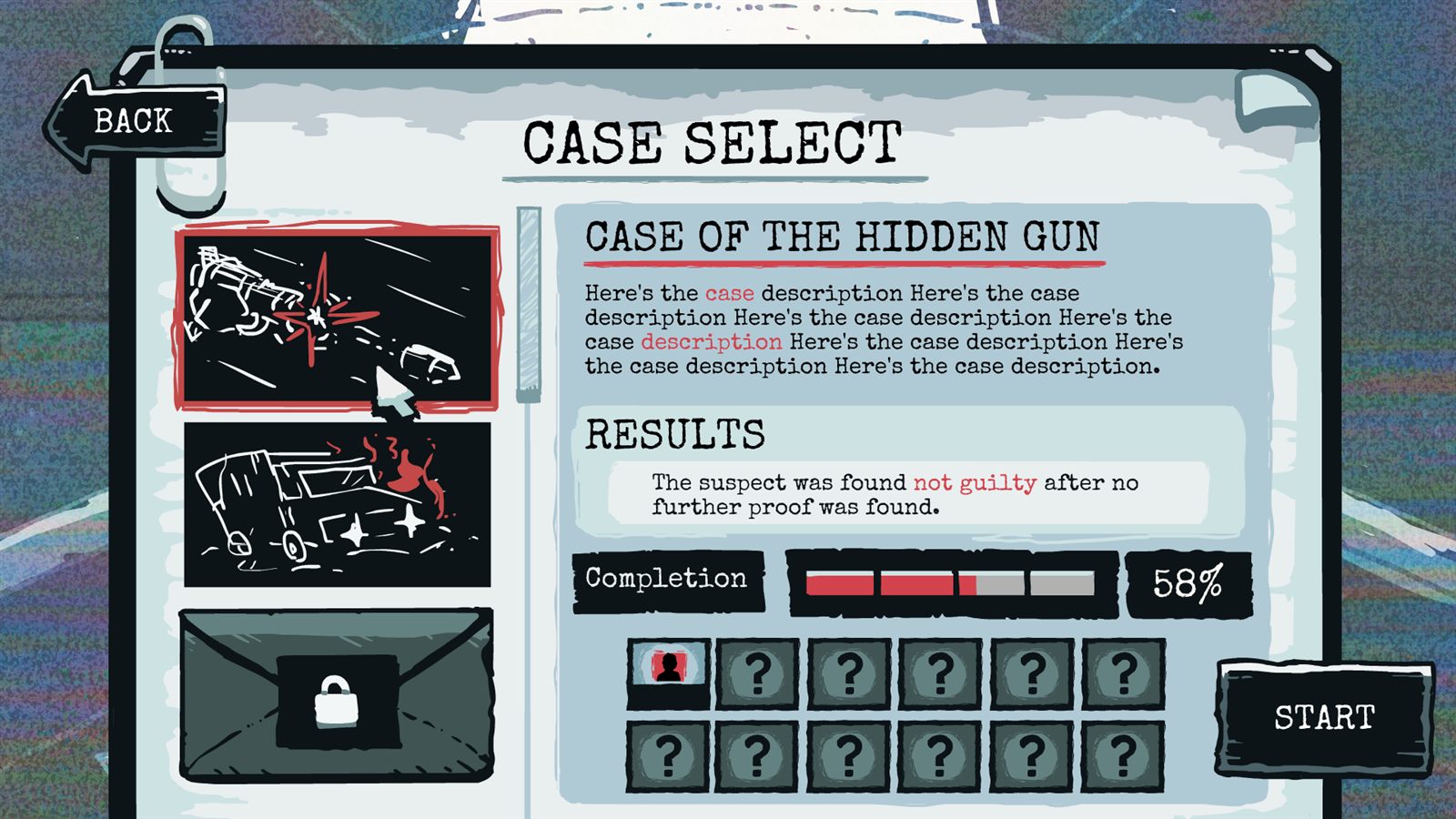
Pick a case file, read the background and step into the room. Each case tracks your results and how much of its story you've uncovered.
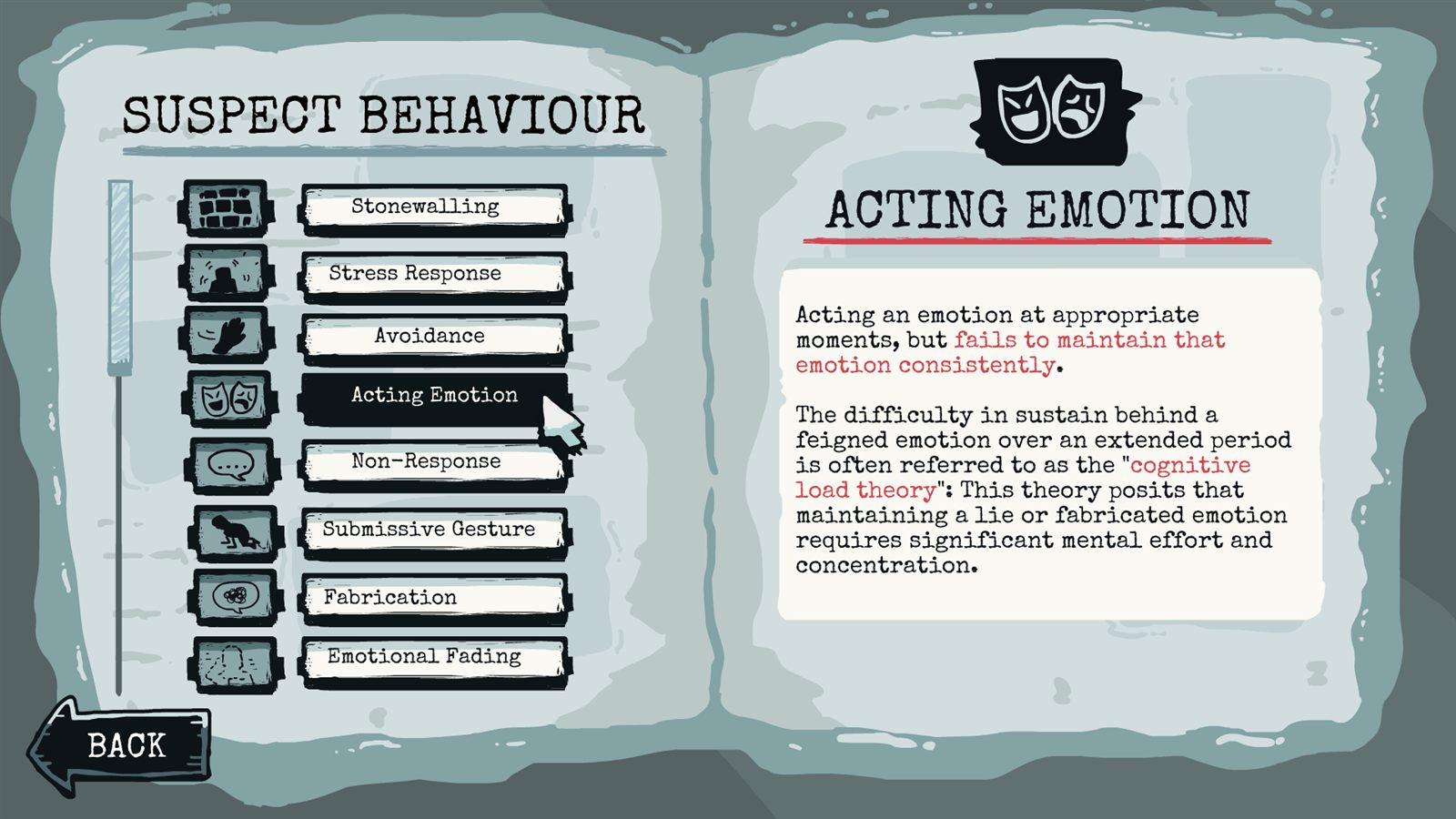
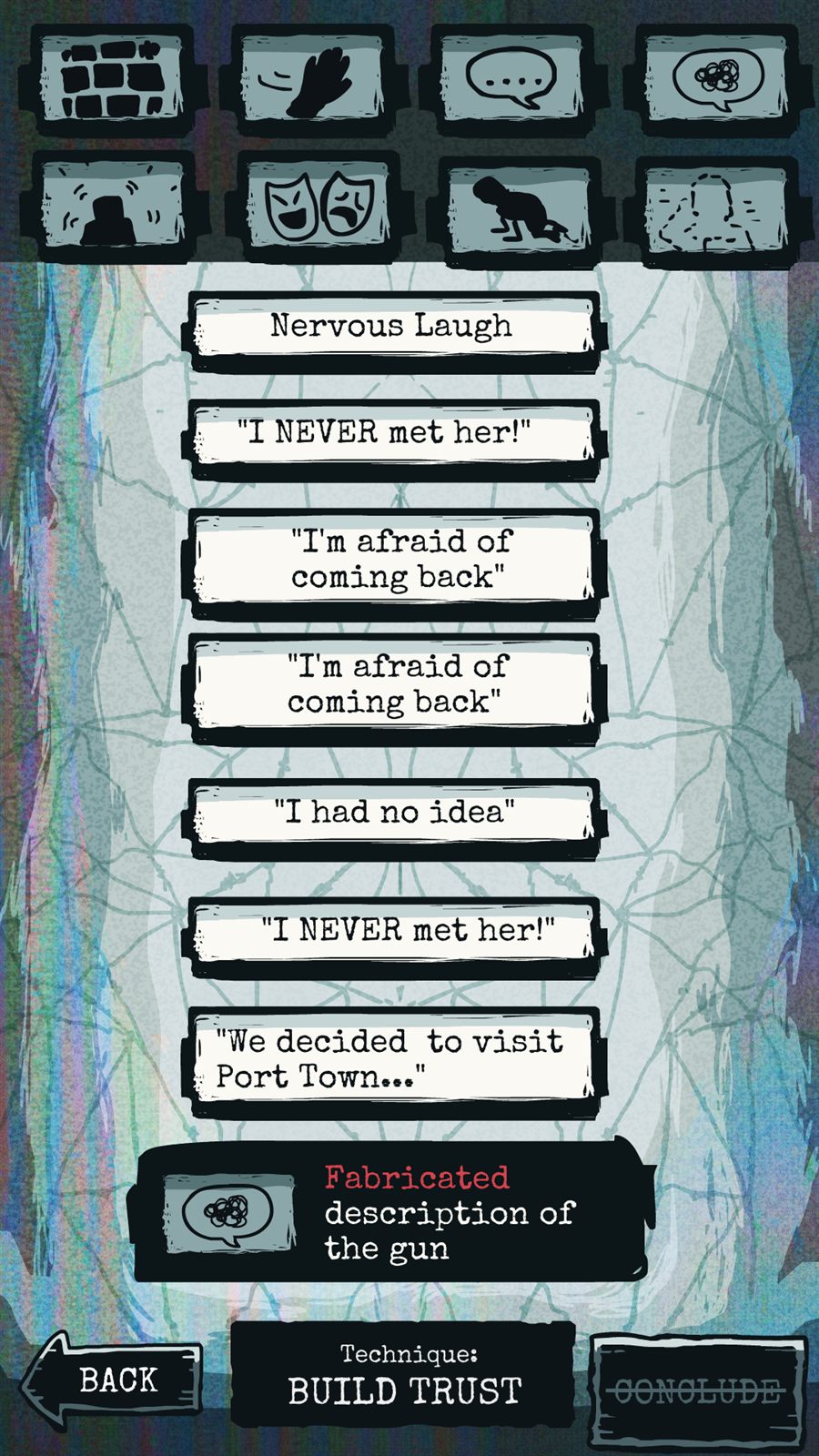
Watch for the tells: stonewalling, avoidance, fabrication, a nervous laugh at the wrong moment. Every behaviour is documented in an in-game casebook drawn from real interrogation practice.
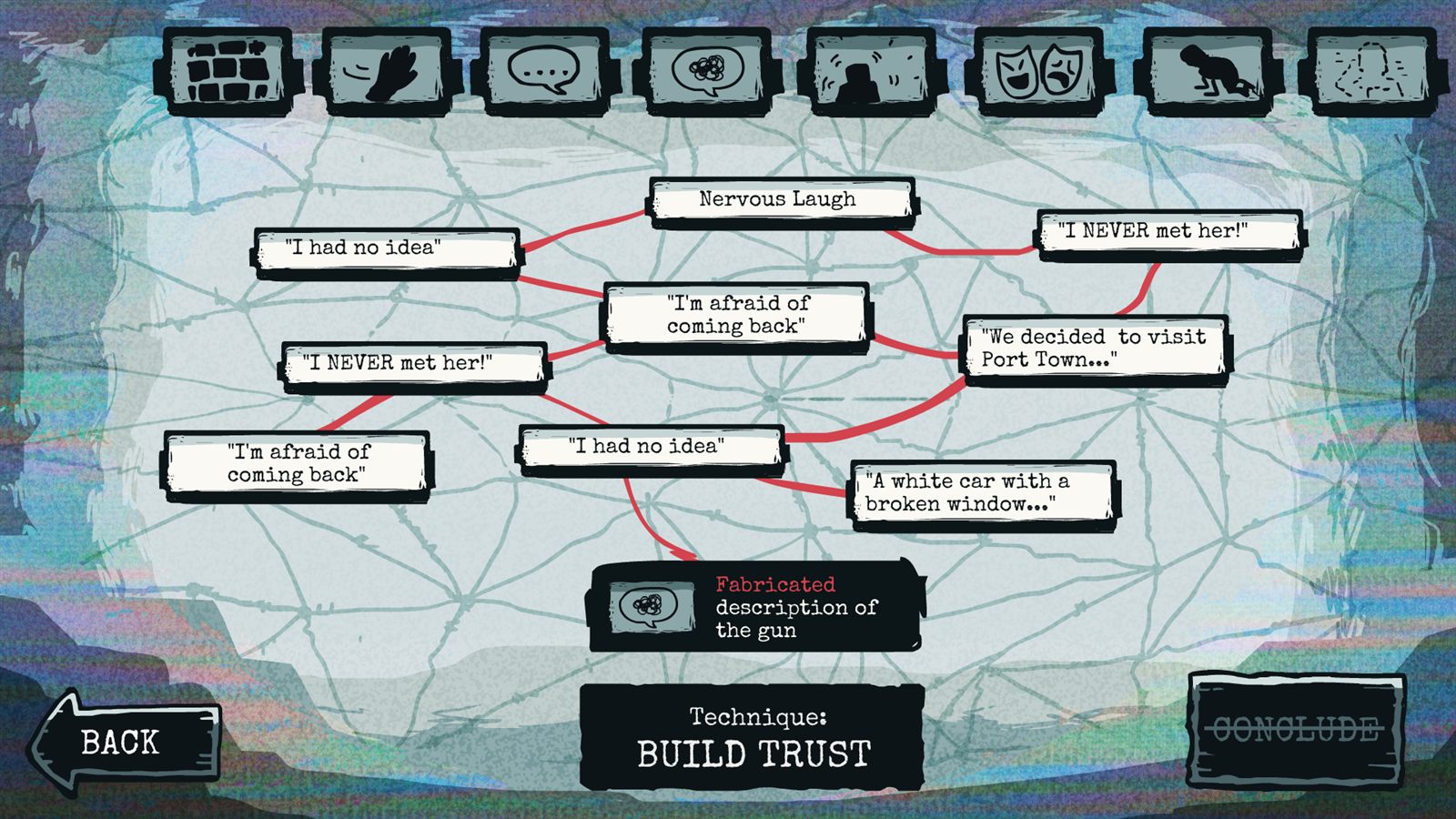
Pin what they said to the board and string the contradictions together. I NEVER met her!
doesn't sit well next to a fabricated description of the gun.
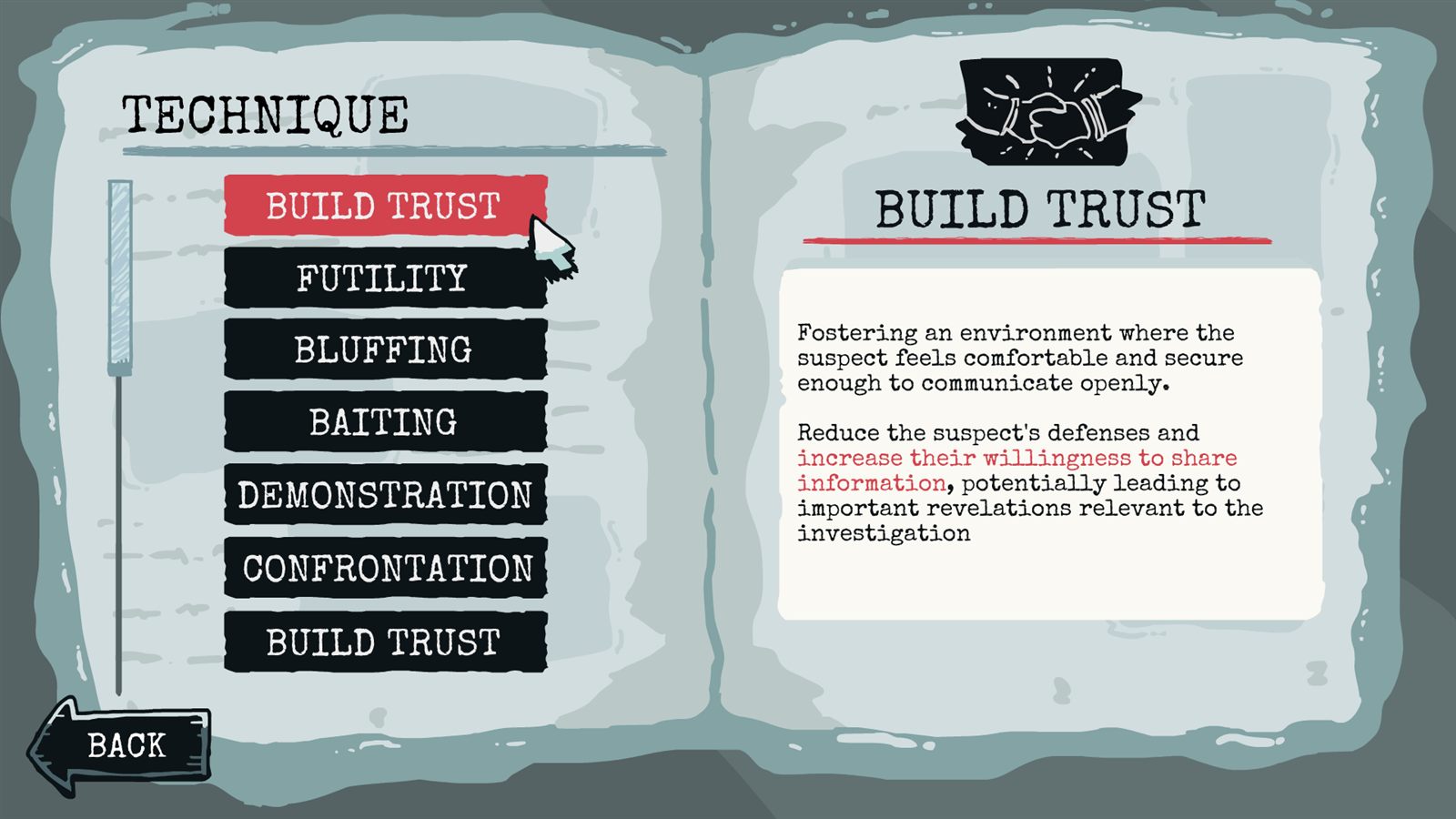
Decide how to press. The approach you pick changes what the suspect gives up and where the case goes next.
Build Trust: fostering an environment where the suspect feels comfortable and secure enough to communicate openly.
From the in-game casebook
File 03 · Suspect behaviour
Murder Book teaches players to recognise real interrogation behaviours. Pick a file.
Shutting the conversation down with short, closed answers or a flat refusal to discuss a topic.
Ask yourself: which question made the wall go up?
Physical signs of pressure, like shifting, fidgeting and touching the face, that spike around specific questions.
Stress isn't guilt. What matters is when it appears.
Steering away from the question: changing the subject, or answering something that wasn't asked.
Notice what they didn't answer.
Acting an emotion at appropriate moments, but failing to maintain that emotion consistently.
A feigned emotion is hard to sustain. This is often explained by cognitive load theory: maintaining a lie or fabricated emotion requires significant mental effort and concentration.
From the in-game casebook
Silence, long pauses or "I don't remember" where an answer should come easily.
Some silences are grief. Some are calculation.
Shrinking posture, lowered gaze and appeasing body language under questioning.
Is the suspect afraid of you, or of what you might find?
Invented detail: a story that's too rehearsed, too specific, or impossible to check.
Real memories are messy. Invented ones are suspiciously tidy.
Emotion that starts strong and drains away as the story goes on.
Watch whether the feeling outlasts the performance.
…plus Narrative Gaps, Emotional Leakage and more in the full casebook.
File 04 · Every case branches
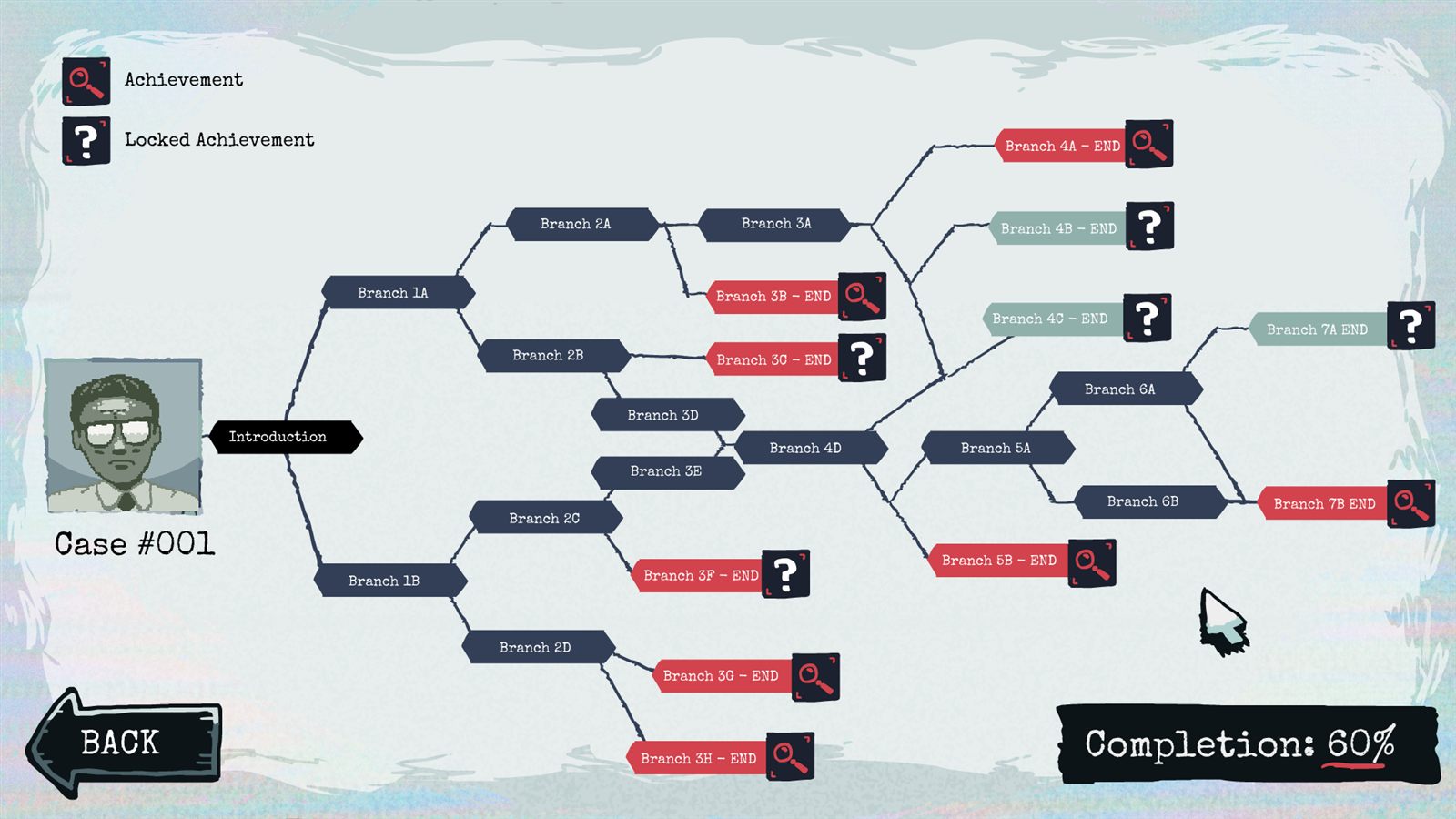
Each case is a branching story. What you notice, what you connect and how you press decide where it ends: a confession, a dead end, or a suspect who walks free because the proof wasn't there.
File 05 · Built for short sessions
Cases run 5–10 minutes and were designed from the start for mobile and quick PC play. The interface works in portrait on a phone and landscape on desktop, so a case fits between stops or at the end of a long day.
Evidence locker
Every case is built from evidence like this. Photographs, objects and places the suspect would rather you never saw.
File 06 · Why it matters
Players practise spotting inconsistencies, weighing evidence and resisting the easy conclusion, through play rather than lecture.
Behaviours and techniques draw on real police footage, psychological interviews and ideas like cognitive load theory, all explained in plain language inside the game.
Bite-sized cases and a clear, illustrated interface welcome people who don't usually pick up a detective game.
An original property from an independent Zagreb studio, co-funded by the European Union through Creative Europe MEDIA and by the Croatian Audiovisual Centre.
File 07 · The studio
Gungrounds is an independent game studio founded in 2016 in Zagreb, Croatia. The team started out developing and porting games for Armor Games, Newgrounds and Kongregate, and has since shipped original titles and worked with some of the industry's best-known names.
Past clients & partners Devolver Digital · Croteam · Mad Head Games · Miniclip · Fumi Games

ID@Xbox GDC Choice 2018 · SGC Indie Choice Award 2017
Co-funded by Creative Europe MEDIA (2022) and the Croatian Audiovisual Centre (2024)
Co-funded by Creative Europe MEDIA (2023) and the Croatian Audiovisual Centre
File 08 · Supported by
Murder Book: The Art of Interrogation is co-funded by the European Union through the Creative Europe MEDIA programme (2023), which supports the development of original European audiovisual and video game works.
The game is also co-funded by the Croatian Audiovisual Centre (Hrvatski audiovizualni centar, HAVC).


Funded by the European Union. Views and opinions expressed are however those of the author(s) only and do not necessarily reflect those of the European Union or the European Education and Culture Executive Agency (EACEA). Neither the European Union nor the granting authority can be held responsible for them.
File 09 · Press & partners
kristian@gungrounds.com
Screenshots, logos and the full factsheet are on the Gungrounds press sheet.
Full press sheet on gungrounds.com ↗File 10 · Questions
Murder Book: The Art of Interrogation is a narrative detective game by Gungrounds, an independent studio in Zagreb, Croatia. You play a detective questioning murder suspects: you read their behaviour, connect contradicting statements and decide how to push until you can reach a verdict. It is inspired by real police footage and psychological interviews.
Murder Book is for players who enjoy dialogue and deduction-driven detective games such as Her Story, Papers, Please, the interrogation scenes of L.A. Noire, Return of the Obra Dinn, Contradiction and Interrogation: You Will Be Deceived. What sets Murder Book apart is its focus on real interrogation behaviour, like fabrication, avoidance and emotional leakage, told in short 5 to 10 minute branching cases.
Murder Book: The Art of Interrogation is built entirely around interrogation. Each case asks you to spot deception using real behavioural cues, pin statements to an evidence board and choose techniques such as Build Trust, Bluffing, Baiting or Confrontation. It is designed as a short-session game for PC and mobile.
Yes. The suspect behaviours and interrogation techniques in Murder Book are inspired by real police footage and psychological interviews, and concepts such as cognitive load theory are explained in plain language in the in-game casebook.
Each case takes about 5 to 10 minutes. Cases branch into multiple endings, with achievements and completion tracking that reward replaying.
Murder Book is in development for PC and mobile. The release date has not been announced yet.
Murder Book is developed by Gungrounds, an independent game studio founded in 2016 in Zagreb, Croatia, led by Kristian Macanga. The studio previously made Serious Sam: Tormental. Murder Book is co-funded by the European Union's Creative Europe MEDIA programme and the Croatian Audiovisual Centre (HAVC).
No. Murder Book: The Art of Interrogation is an original video game by Gungrounds. It is not connected to the TV series, podcast or books that share the name; "murder book" is a police term for a homicide case file.
File 11 · On the record
Articles, funding announcements and industry listings about Murder Book: The Art of Interrogation.